We've been in Israel for about a month now, and one question that we consistently receive from readers of this blog, friends and family, and Israelis alike is: what exactly are you doing in Israel? The nature of our project was broadly defined in our first blog post, and I have done my best to update on the most salient and exciting trips, meetings and events. And while our busy schedule has meant that no two days in Israel are created equal, I will attempt to express how we spend our time between travel and meeting important dignitaries.
 |
| Asher meeting with the group |
After a weekend generally packed with travels, meetings and a little down time on the beach if we're lucky, Monday morning the whole team heads to the Bronica Innovation Lab at the Technion. Located on the sixth floor of the Industrial Engineering and Management Building, we work on our technology commercialization strategies while sitting around a large conference-style table. Between market size research, building presentation decks and meetings with Dingman Center Managing Director Asher Epstein, our office time keeps us quite busy.
While we're at the Technion we also take the opportunity to visit the laboratories where the cutting edge research that we are attempting to commercialize originated. Here, we have the opportunity to not only tour the facilities of the Technion but also meet with the innovators behind the technologies in order to understand the scientific and commercial sides of their work.
 |
| Touring the Technion Visitor's Center |
When we need a break from the rigor of our work and meetings, the team walks outside our office to enjoy the view from the roof of the Bloomfield Building. From our vantage point atop a hill, we can see all of downtown Haifa, the Old City and even a little bit of the beach. Enough to recharge our batteries and get back to work, anyways.
Today we had the amazing opportunity to visit with Israeli President Shimon Peres in Jerusalem. We joined the American Technion Society at the beautiful David Citadel Hotel in a small group session with President Peres and Technion President Peretz Lavie who started the morning by discussing the history of the Technion. The institution, which is about to celebrate the 100 year anniversary of its cornerstone laying, has been the backbone of Israel's high-tech industry, training its engineers and producing groundbreaking research for years.
 |
| President Shimon Peres with Peretz Lavie |
President Peres, whose support of the Technion over the years helped Israel become the high-tech powerhouse that is is today, predicted the need for Israel to now move into neuroscience and neurotechnology with the same vigor that it entered the nanotechnology industry. Specifically, President Peres emphasized the importance of building better computer-brain interface technology to help researchers understand more precisely how the human mind works. With this technology, he suggested, researchers could develop stronger therapeutic methods and devices to better cure neurological ailments such as Parkinson's Disease and Alzheimer's.
The session ended with an open question and answer session for President Peres, who fielded questions on topics such as how Israel will incorporate the innovations of companies like Better Place into its infrastructure in the coming years. The mere fact that President Peres dedicated his time to our group indicated the importance of the high tech industry in Israel, but in spending 90 minutes of his morning in open and frank discussion with us was truly unprecedented. When a statesman of his caliber is willing to dedicate his day to such a cause, its shows the esteem in which the Technion and its innovations are held and how treasured they are by the Israeli government and the individuals who run it.
Thanks to the great work of Marc Terada and Jay Zhang, we have some really great photos to share with everyone. Check out our photo blog for beautiful pictures of our work, meetings, travels and free time. We'll be updating with more photos throughout the summer so everyone can keep up to date with our experience. The photo site is linked-up on the side of the blog, so check back often to see the latest photos.
Between shopping in the Souq, touring around Jerusalem, floating on the Dead Sea and hiking up Masada, our trip to the south of Israel provided the opportunity to visit some of the nation's leading companies, innovators and thought leaders. From social venture incubator PresenTense to world drip irrigation leader Netafim, we met with a broad spectrum of business leaders whose scope and purpose truly run the gamut:
PresenTense
This Jerusalem-based incubator for social entrepreneurs fosters change in Israel and abroad by providing the right conditions, networks and education for thought leaders to be successful. From the open kitchen and beanbag chair furnished common area to their proprietary pedagogy focused on building an idea into actionable social change, PresenTense understands innovation. During our visit they put this to the test by taking our team through an "idea slam", which is a creative method to combine individual thoughts on an idea and turn them into a single plan to create change.
 |
| Yaron from PresenTense |
Hadasit
Before explaining Hadasit (the biomed technology transfer company for Hadassah Hospital), one must first understand Hadassah Hospital. Perched on a massive Mount Scopus campus, Hadassah Medical Center is one of the world's leading medical research companies and certainly the largest facility of its kind in Israel, producing countless patents and innovations for improved medical treatments...which is where Hadasit comes in. The biomed technology transfer company for Hadassah selects the most promising intellectual property coming out of Hadassah and leverages the hospital's facilities to commercialize the technology in-house. With so many of our team members working on medical and biomedical technology applications, this visit showed us one of the several strategic options for our own business plans.
Netafim
From its humble roots on a Kibbutz, this company has grown to become the worldwide leader in drip irrigation and is a key part of keeping Israel green and making its deserts arable. With operations all over the globe, from India and China to the US and Argentina, Netafim is a great example of how solving a local problem can lead to a global business solution.
Cafe Ringelbloom
What's better than a delicious lunch served in a trendy cafe? Knowing that the cafe is part of a socially conscious venture that takes at-risk youth and provides them with the tools and opportunities to better their lives. With a great mission and delectable food, this place is definitely worth a visit for anyone passing through Be'er Sheva.
 |
| The team at Cafe Ringelbloom |
No visit to Israel is complete without a trip to its capital and most famous destination: Jerusalem. As part of a trip to the south of Israel that combined business, pleasure and cultural learning, we had the great fortune to see many of the wonders of this ironically timeless town. I will disclaim this post, however, by stating that I am neither a historian nor a theologian. Indeed, more in-depth coverage of the dates, names and religious significance of Jerusalem’s myriad sites should be sought elsewhere. Rather, I will offer my own perspective on this beautiful city and attempt to express how visiting it has changed my perspective on the country, the region and the world.
Jerusalem is a recognizable name across the globe. To that end, we are all aware that much of the controversy in this part of the world stems from the variety of claims made to his holy parcel of land. And we have all seen news stories about when these claims boil over into conflict – but this what not my experience at all. Throughout my visit, Jerusalem was nothing short of safe and secure. We passed from the Muslim Quarter to the Jewish Quarter to the Muslim Quarter and from holy place to holy place, and never felt anything short of welcome. If nothing else, witnessing local residents, tourists and religious pilgrims all visiting the same places provided a sense of hope that differences are being set aside as the city’s diverse populations find a way to coexist.
My few days in Jerusalem also provided a deeper understanding of the geopolitical landscape of this region. For all of its historical importance, this region continues to dominate the headlines on a regular basis, and walking its streets gave me insight into the city and the region. The Palestinian Territories of the West Bank lie just outside the city limits, and Jordan can be seen from a hilltop on a clear day. This, combined with Jerusalem’s own diverse population, helped put into perspective the meaning of the city and how it factors into the overall geopolitical landscape of the Middle East.
Without question, the most valuable takeaway from my time in Jerusalem is a deeper appreciation of what makes Jerusalem so important to so many people. Jews, Christians and Muslims all lay claim to parts of this city, and throughout its history Jerusalem has been controlled by a host of rulers from all faiths and backgrounds. A simple Google News search tells you that the city is important, but it cannot explain why. Only through walking its streets, shopping in its markets and talking too its residents can the visitor hope to understand the complexity that makes this city what it is.
This last week we had the amazing opportunity to visit the timeless city of Jerusalem. It is at once a holy place for some of the world's largest and oldest religions, a destination for pilgrims from across the globe, a tourist attraction that makes a significant contribution to the Israeli economy, and the cultural heartland of Israel.
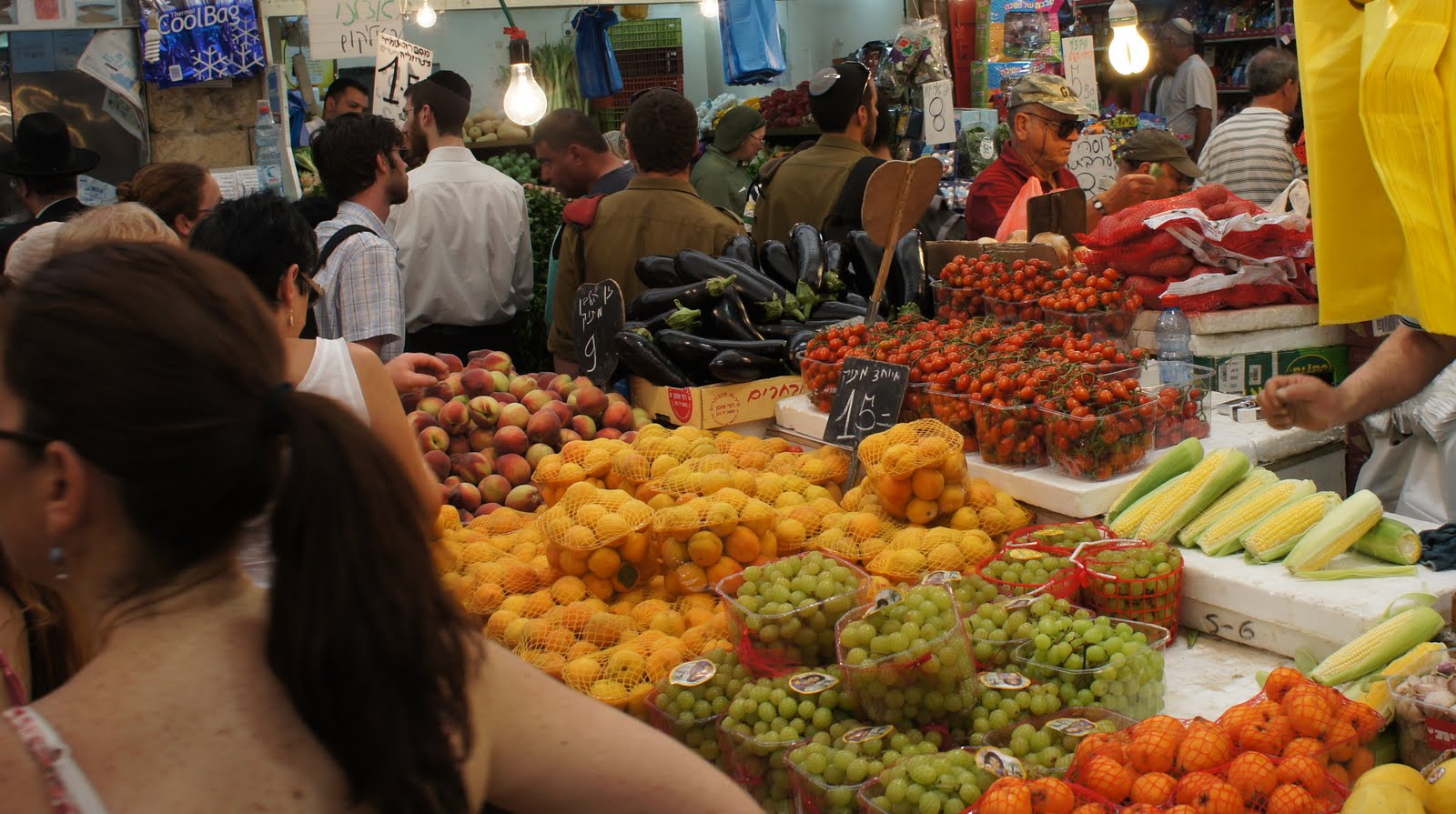
Our first introduction to Jerusalem was in the Souq, a large market that was bustling with shoppers picking up provisions before the city shuts down on Shabbat. (Jewish law calls for a day of rest beginning with sundown on Friday, and all shops close for the ensuing 24 hours.)
The market offers every kind of delicious Israeli and Middle Eastern delicacy you could ever crave. The fruits and vegetables were bright and fresh, not necessarily what the novice would expect from a desert where it seldom rains. I guess we have Netafim's homegrown irrigation technology to thank for that.
The fresh-baked breads were especially delicious and ubiquitous. The challah bread was baked special for Shabbat. Challah in the US does not even compare. All in all, the Souq was a great introduction to the long weekend we would spend in Jerusalem as well as a primer on Middle Eastern markets at large. The tradition behind this type of marketplace dates back to long before we were born, and witnessing it in Jerusalem was a special experience. Eating all the goodies we picked up was just the icing on the cake.
(all credit to Ken Chen for the beautiful photos)
This last week we had the amazing opportunity to visit some of Israel's most beautiful sites. Our first stop along our journey south was Caesarea, an ancient port city on the Mediterranean built by Herod the Great. I will spare you the details, dates and meanings behind the sites we visited, as you could surely find them elsewhere. Besides, any world traveler knows the golden rule of story telling: never bore your audience with the details when all they really want is photos. So without further adieu (all photos courtesy of the talented Jay Zhang): Like any good Roman settlement, it starts with an amphitheater...
...and a hippodrome...
...for chariot racing.
And what Roman would build a city without columns...
... to hold up the fancy marble work?

And don't forget the aqueduct for fresh water... |
 ...and all this with a beautiful view by the sea. ...and all this with a beautiful view by the sea. |
The views expressed on this site are those of Andrew Giessel, hereafter referred to as "the author", and do not necessarily represent those of the University of Maryland, the Robert H. Smith School of Business, or the Technion. All content provided on this blog is for informational purposes only. The author makes no representations as to the accuracy or completeness of any information on this blog or found by following any link on this blog. The author will not be liable for any errors or omissions in this information nor for the availability of this information. The author will not be liable for any losses, injuries, or damages from the display or use of this information.